What is a study, and what does kept, candidate or discarded mean?
A study is one question measured against a baseline. Kept means it is in the report; candidate means the scan filed it and you have not judged it; discarded means you took it out.
Every study has the same skeleton — a condition ("NQ closes in the top quartile of its range"), one or more outcomes ("the next session takes the prior high"), and a baseline (how often that outcome happens across every session in the dataset, condition or not).
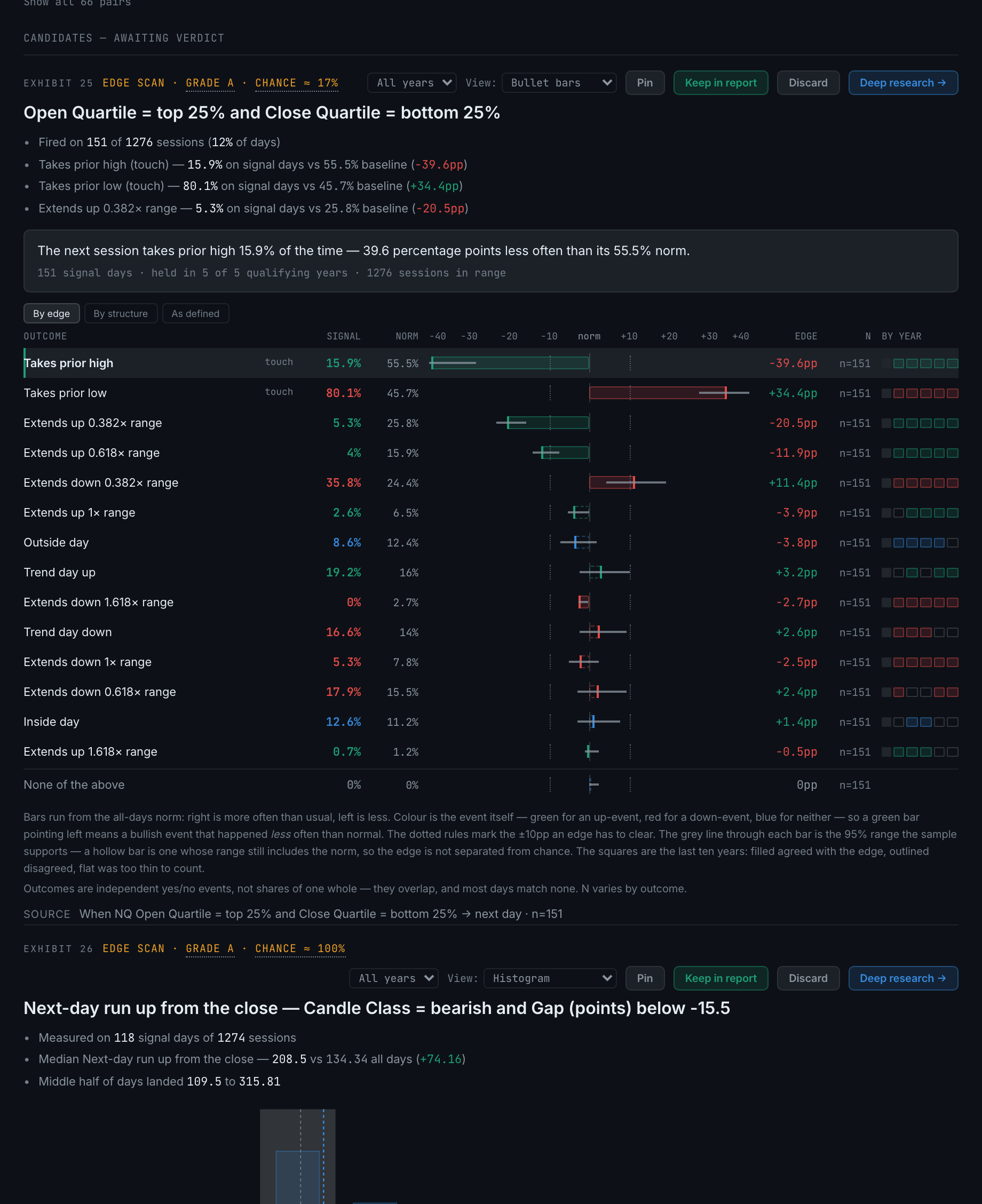
Studies arrive from four places, and the report tells you which in the study's own note: a template shipped it, the edge scan found it, you asked for it in plain English, or you built it in the builder.
They then sit in one of three states:
- KeptPart of the report. These are the numbered exhibits, and they are what the desk row counts, what the radar checks each morning, and what confluence reads against each other.
- CandidateFiled by the scan, awaiting your verdict. Candidates appear under their own heading below the kept exhibits, each with Keep in report and Discard buttons. The desk row counts them as to judge.
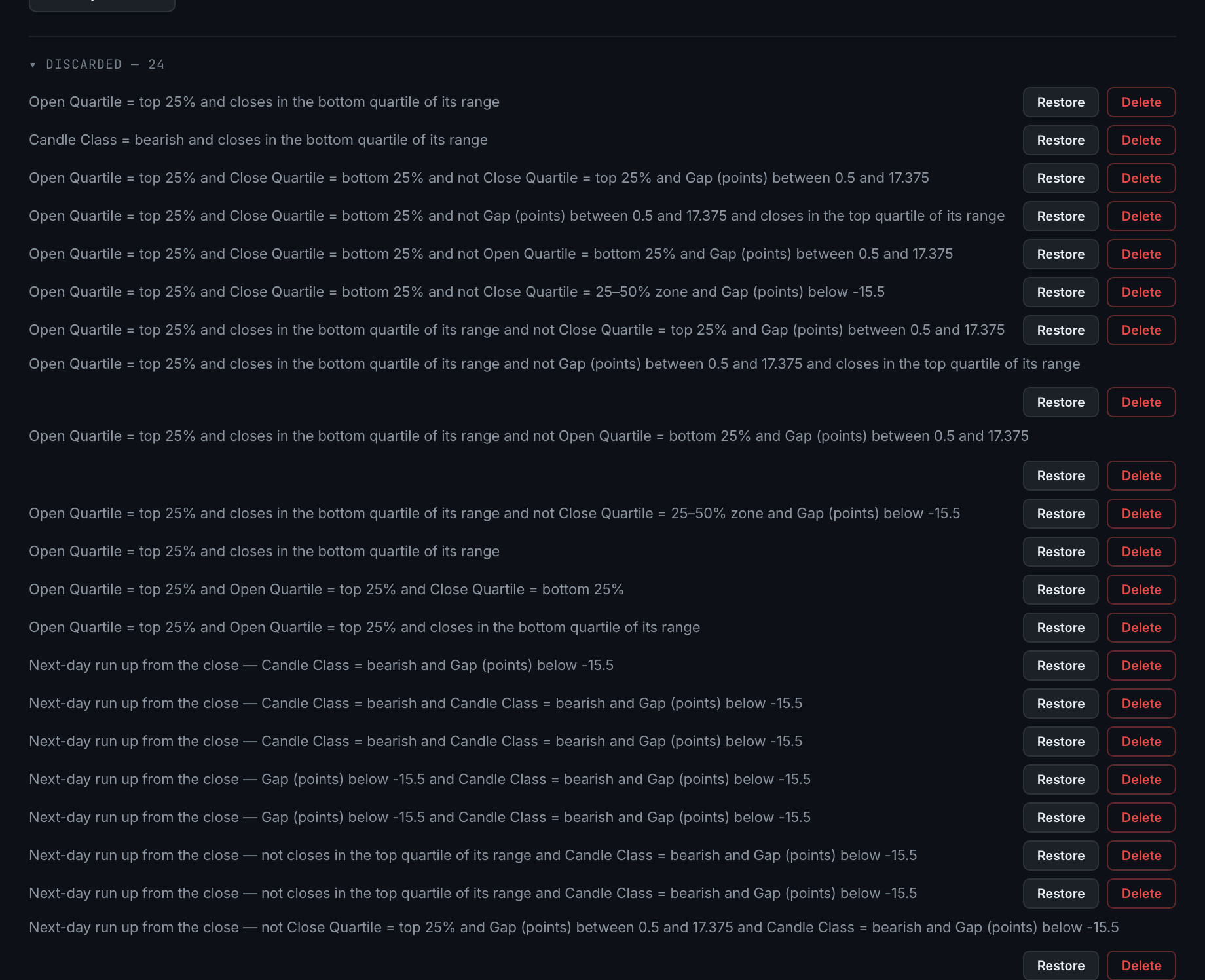
- DiscardedOut of the report but not gone. They live in the collapsed drawer at the foot, and Restore brings one back as a candidate.
Discarding is reversible and cheap, so it does not ask for confirmation. Deleting a study for good — which is only offered from inside the discarded drawer — does ask, and says plainly that the dataset, its rows and any columns the study computed all stay behind. Only the study goes.