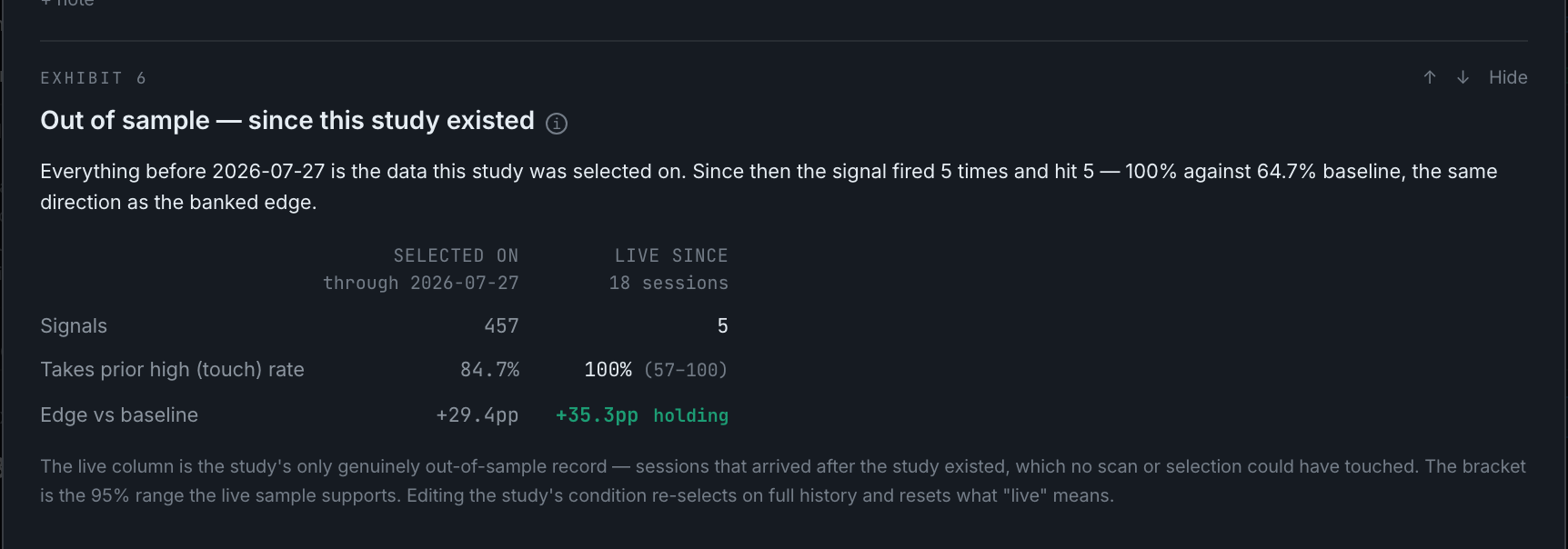
What is the out-of-sample ledger?
The study's record on sessions that arrived after it was created — the only data no scan or selection could have touched.
This is the strongest evidence on the page, and the reason is worth stating.
Every other number in a study is measured on data the study was chosen from. If the edge scan swept three thousand combinations and filed this one, then this one is, by construction, among the best-looking things in that data. That is what a chance check is for — but a chance check is still an argument about the same rows.
The ledger is not an argument. It splits the dataset at the study's creation date and reports the two sides separately: Selected on, through that date, and Live since, the sessions that have arrived after. The live column is genuinely out of sample. Nothing selected it.
It gives three rows — signals, the outcome rate, and the edge against baseline — and a plain sentence saying what the live side can and cannot claim yet:
- Too few to judge until at least 5 signals have fired live. It says how many have.
- HoldingThe live edge points the same way as the banked one.
- DivergingIt points the other way. This shows on the report card as an amber diverging live tag, so you can see it before deciding which study to open.
The bracket next to the live rate is the 95% range that sample supports, and on five signals it is enormous. Small live samples swing; the exhibit says so rather than letting you read a 100% off five as a fact.
One thing to know: editing the study's condition re-selects it on full history, which resets what "live" means and starts the ledger again.